
Master copies, colour relationships and painting practice
I discovered Joaquín Sorolla relatively late in my development as a painter. A chance encounter with an exhibition in Milan immediately changed the way I looked at light, colour temperature and the apparent freedom of a single brushstroke. These two master studies were painted several years apart, but both began with the same question: what can be understood only by rebuilding a painting by hand?
I was planning a trip to Monza when I happened to come across a Joaquín Sorolla exhibition in Milan, in a museum close to the Duomo. Until then, I knew his work only superficially. Seeing the paintings in person was completely different.
The colour was richer and more controlled than it appeared in reproductions. Broad passages that looked spontaneous from a distance proved to be precisely placed. The paintings were full of light, but the effect did not come from simply using brighter colours. It came from carefully balanced relationships between warm and cool passages.
I was immediately drawn to his way of making a painting feel both completely observed and openly painted. Sorolla quickly became my favourite painter.
Why I paint master studies
I make master studies primarily as exercises. They provide a break from developing compositions based entirely on my own ideas and allow me to concentrate on one clearly defined painting problem.
Sometimes I return to them when I feel blocked. At other times they are simply a way to bring variety into my painting practice or to paint for pleasure without having to invent the complete subject from the beginning.
Like painting outdoors from direct observation , master studies can be extremely instructive. Plein air painting teaches you to respond quickly to nature. A master copy teaches you to analyse decisions already made by an exceptional painter.
Neither process is passive. To copy a shape with understanding, you have to decide why it has that value, temperature, edge and direction. Reproducing every small detail is less important than discovering the structure holding the whole painting together.
A useful master study is not a mechanical duplication. It is a temporary conversation with another painter’s decisions: where a form begins, where it disappears, how a warm colour is controlled and how much can be described by one deliberate mark.
Instantánea, Biarritz — painting the memory of an original
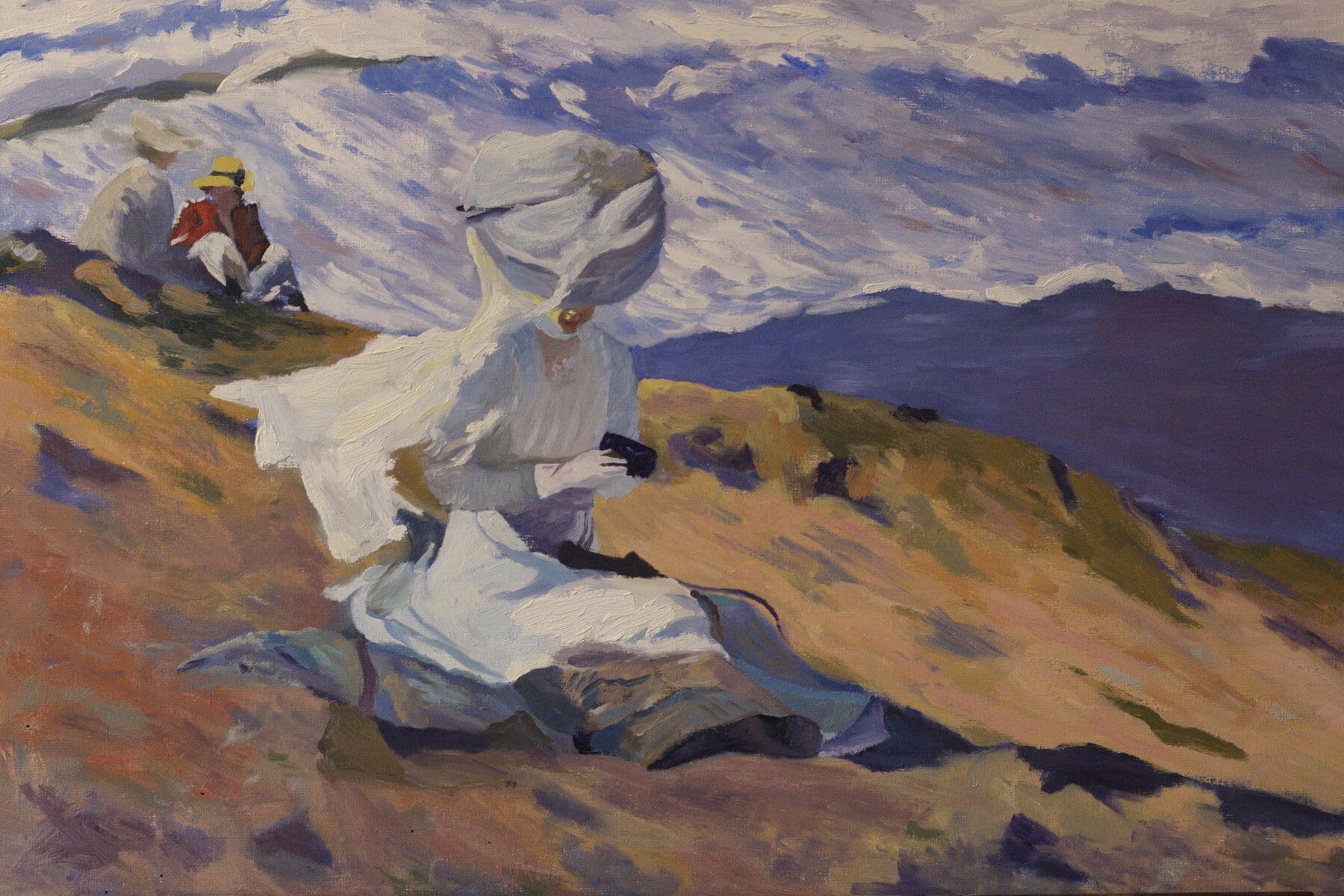
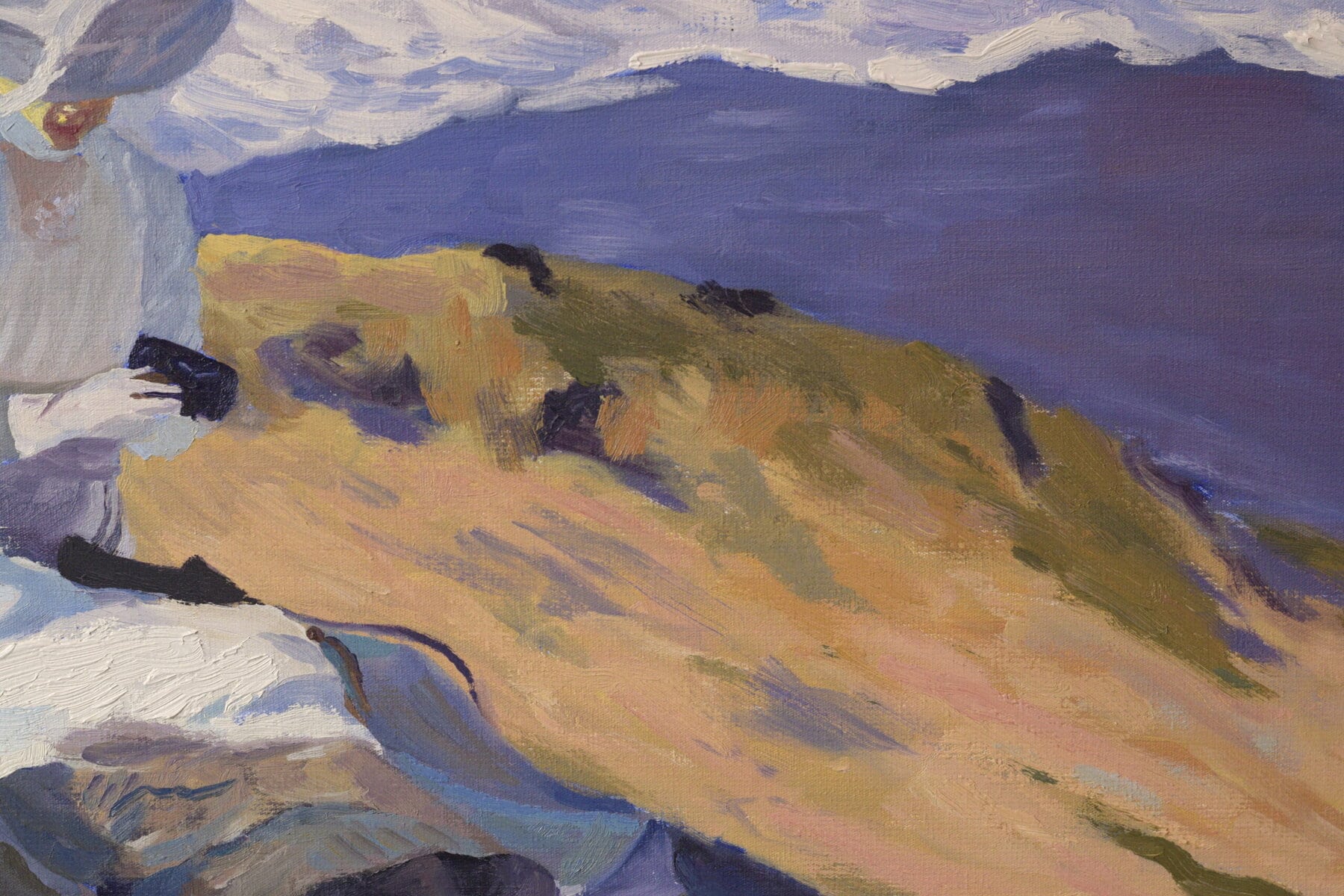
I painted my study after Instantánea, Biarritz shortly after returning home from the exhibition. The colours and the physical impression of Sorolla’s paintings were still fresh in my mind.
I did not begin the work with a larger theoretical plan. I simply wanted to test myself. I wanted to find out whether I could rebuild something of the movement, brightness and colour relationships I had just seen in the original paintings.
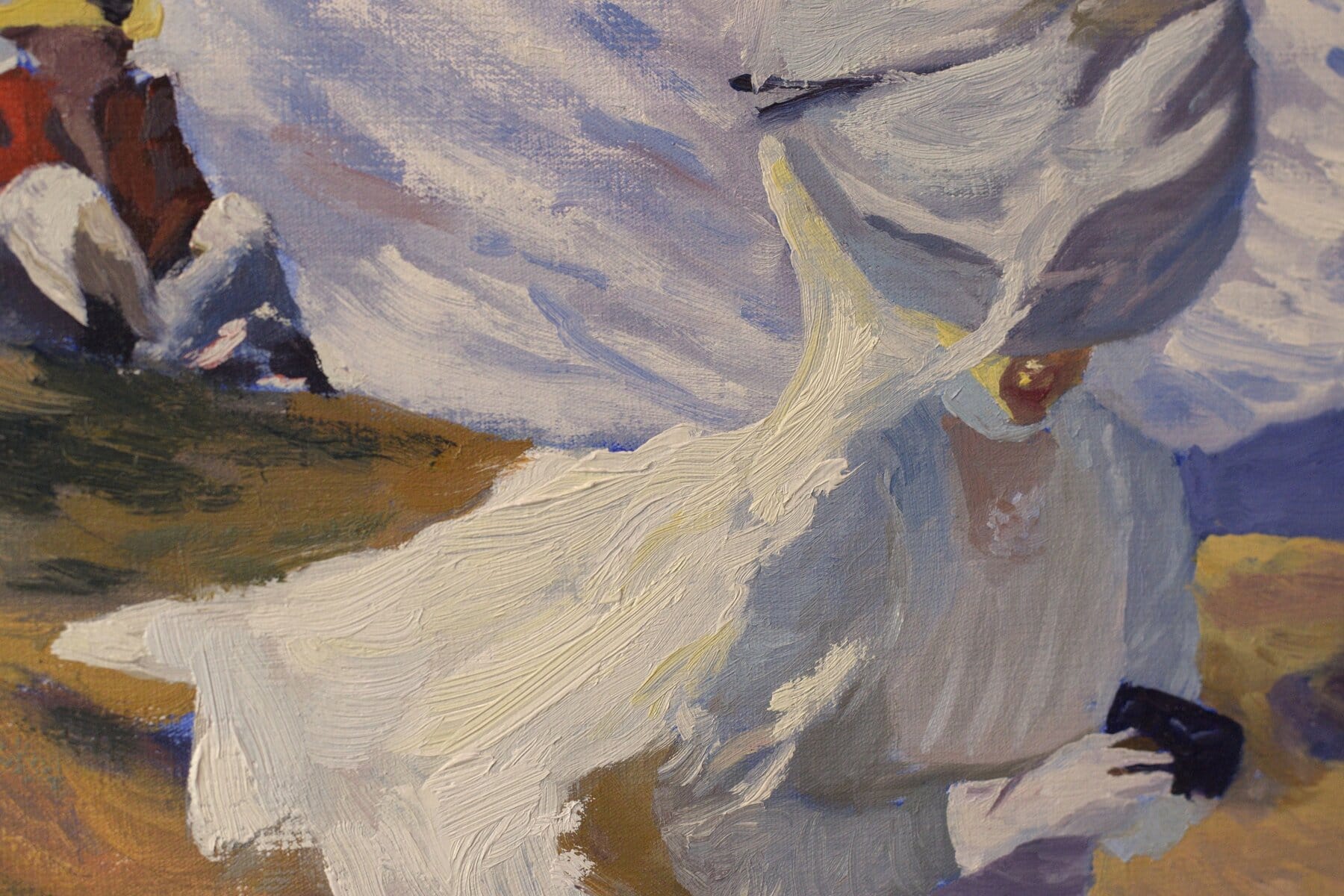
The central challenge was the figure dressed in white. Sorolla’s whites are never empty or neutral. They contain reflected violet, blue-grey, warm cream and flashes of stronger light. The form of the dress is created as much by temperature changes as by conventional light and shadow.
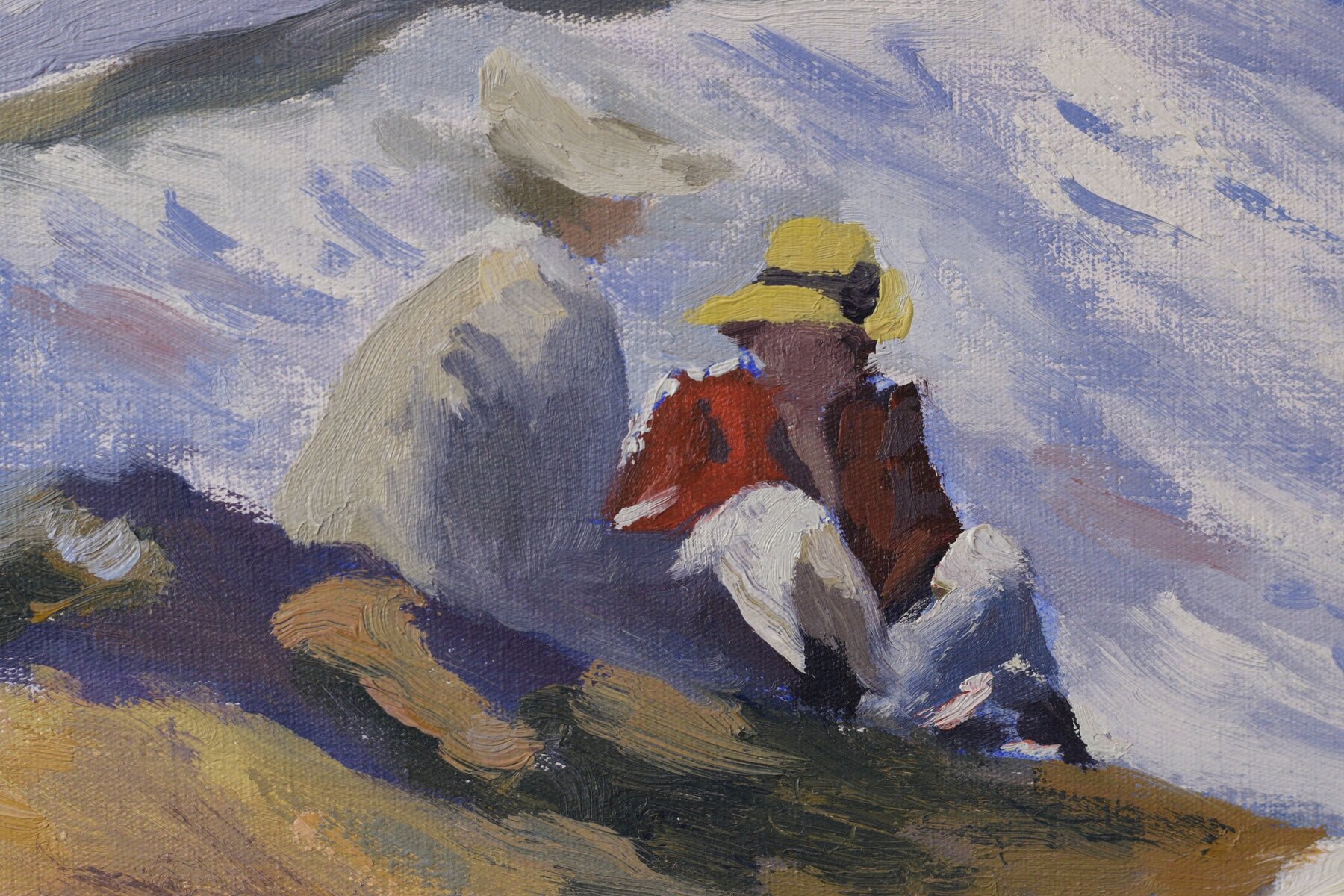
Behind the figure, the ochre coast and violet-blue sea form a broad, simplified setting. The smaller figures are described with very little information, yet their colour accents are enough to establish scale, depth and movement.
Bebedor Vasco — colour temperature inside a portrait
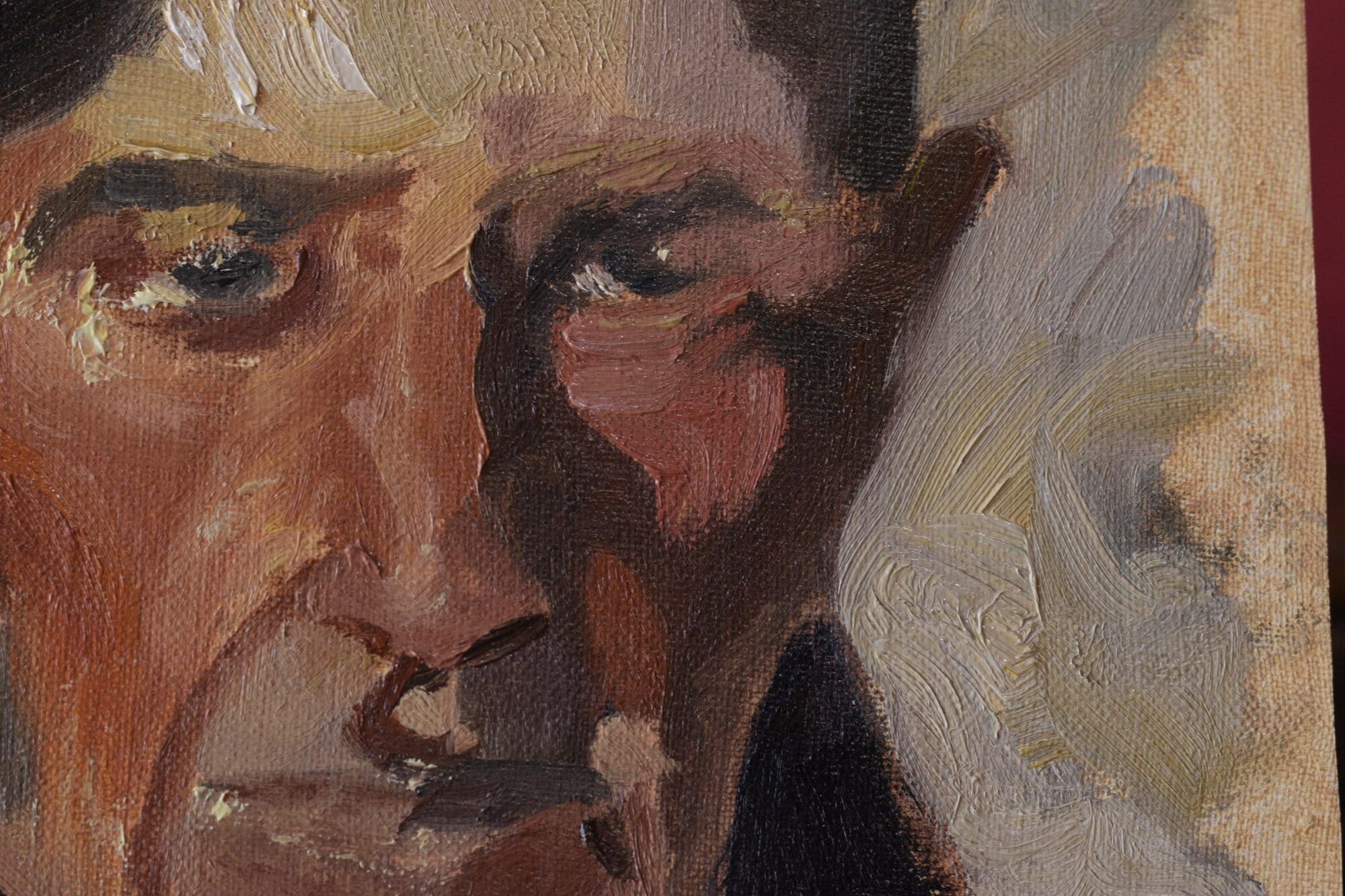
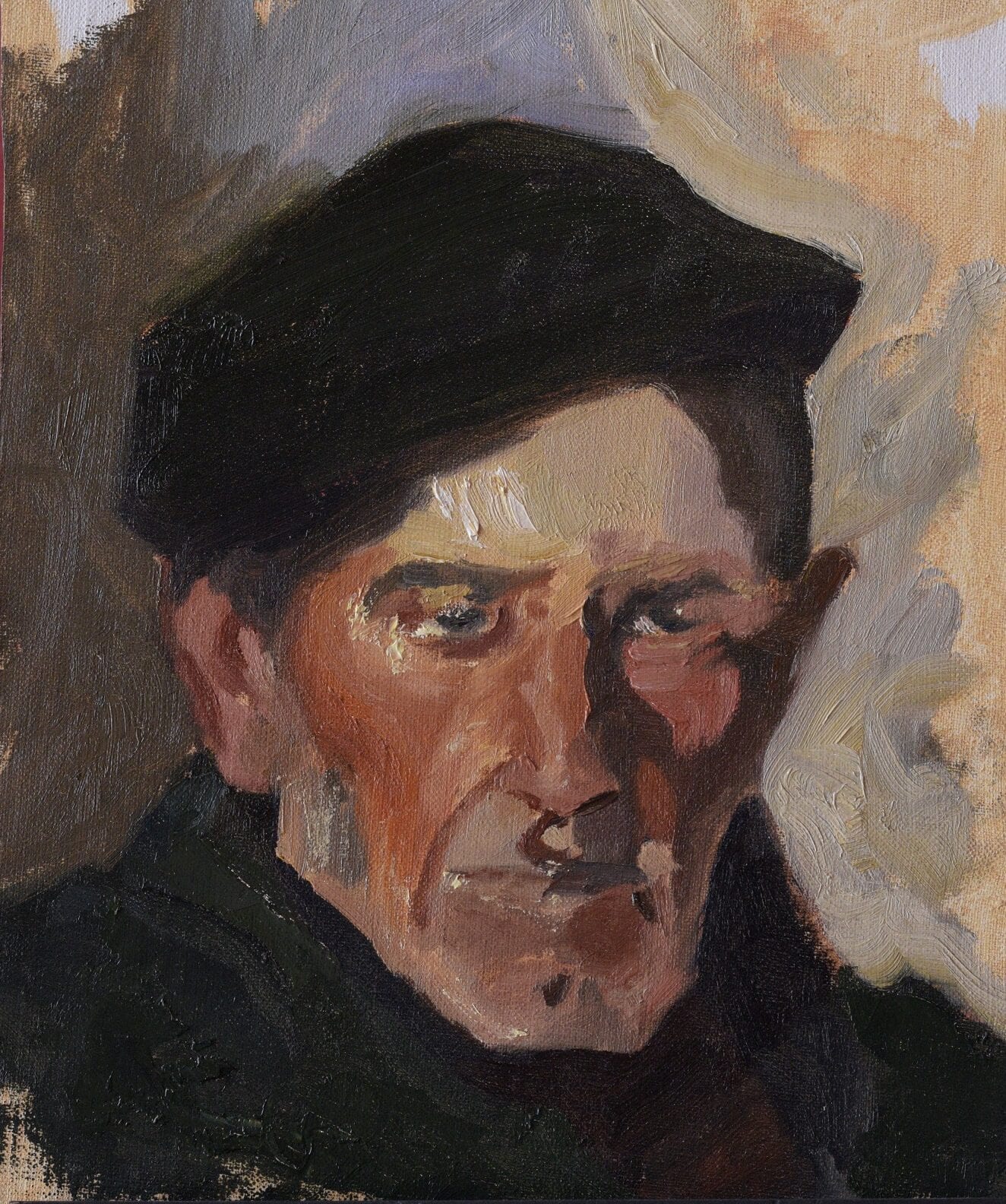
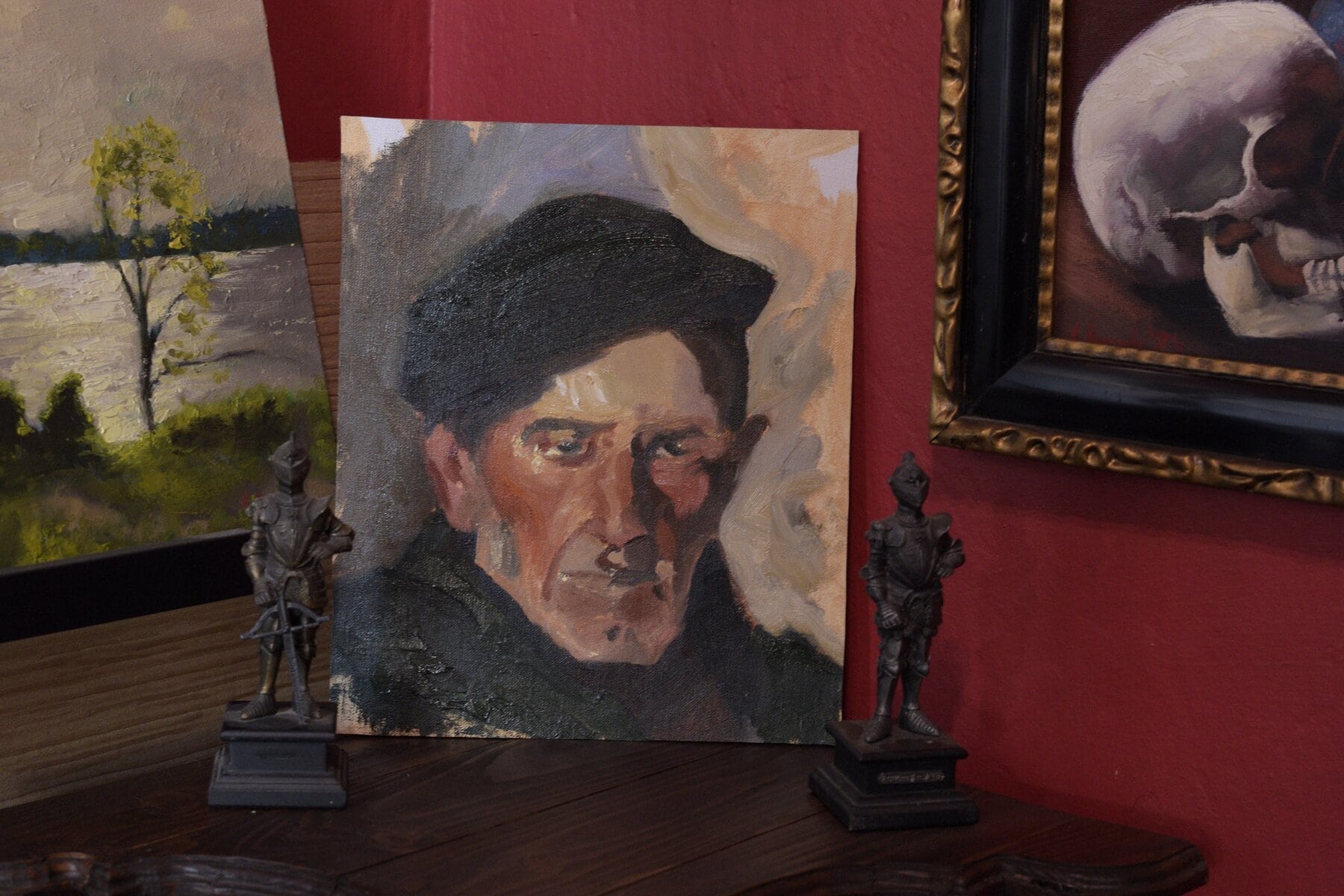
I painted the study after El bebedor vasco several years later. This time my main intention was to practise portrait painting.
I also had a colour that I wanted to explore: Michael Harding Venetian Red. I felt that its earthy, transparent warmth would provide a useful foundation for the reds, ochres and muted flesh tones in the sitter’s face.
One of the most interesting relationships in the painting is the contrast between the dark, subdued green of the beret and scarf and the restrained reds of the skin. This is one of Sorolla’s great strengths: he does not treat warm and cool colour as isolated effects. Each temperature exists in relation to the colours surrounding it.
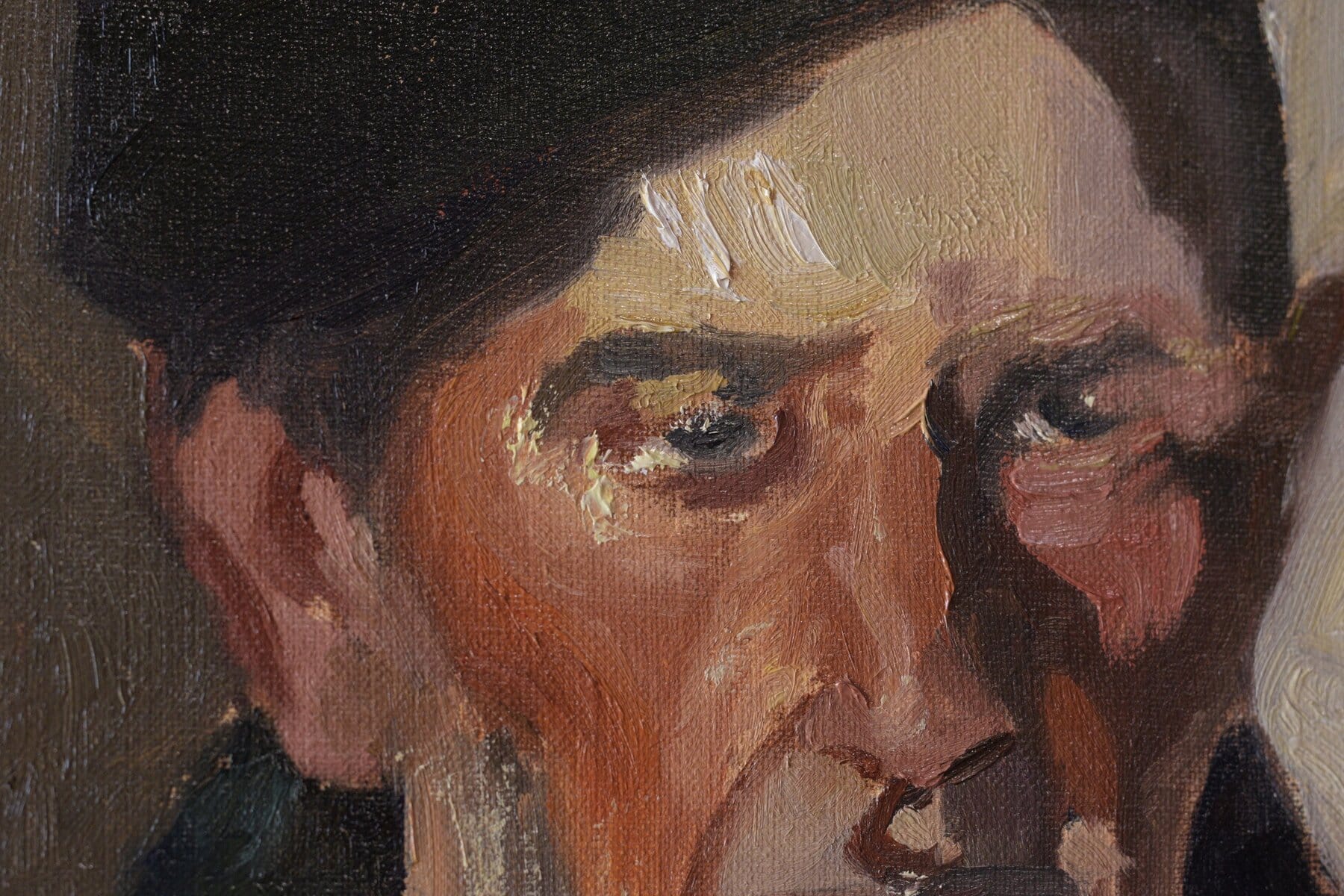
The jaw is described with strongly exaggerated, angular lines. In isolation, parts of the drawing could almost appear cartoon-like. Yet these simplified structural decisions are combined with rich colour transitions, producing a face that feels convincing and alive while remaining completely painterly.
What Sorolla taught me about placing paint
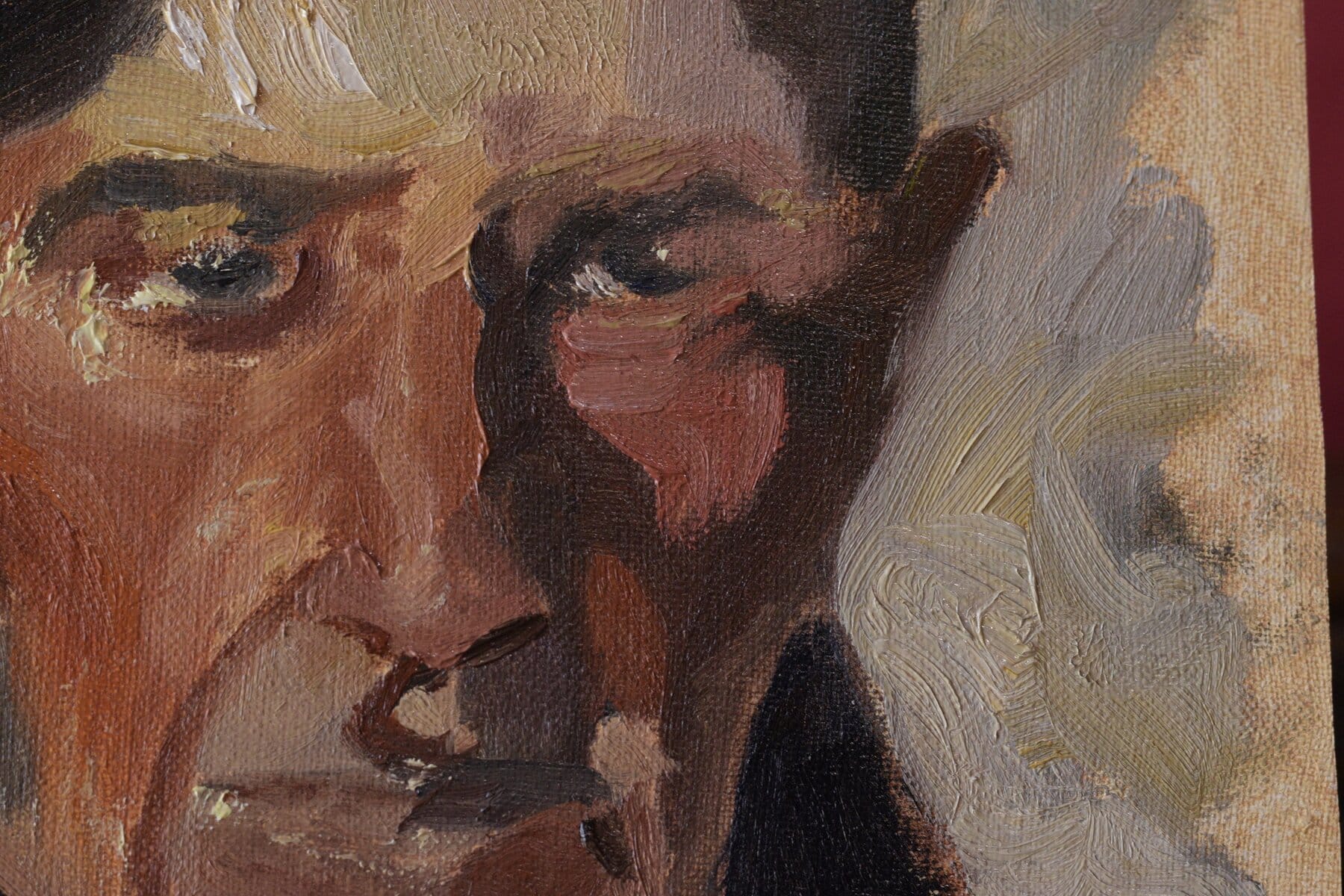
One detail worth studying closely is the way the paint is applied. Important shapes are often described with long, individual brushstrokes. A mark can establish the side of a jaw, a fold of fabric, the direction of a shoulder or the edge between light and shadow.
This is something I try to carry into my own paintings . Instead of repeatedly correcting and softening a shape, I try to find a brushstroke that can describe it with enough confidence in one movement.
The result does not have to be smooth. A visible, well-placed mark can provide more structure and life than a carefully blended passage. The difficulty is that the stroke has to contain several decisions at once: direction, width, value, colour and edge.
1. Temperature is relational
A red appears warmer or cooler depending on the green, violet, ochre or neutral colour placed beside it. Sorolla’s colour is powerful because these relationships are carefully controlled.
2. White contains colour
White clothing can include blue-grey, violet, yellow, cream and reflected colour from the surrounding landscape. Pure white alone cannot describe the form.
3. Simplification can increase realism
Exaggerated angles and broad masses may appear less accurate when viewed separately, yet they often create a more convincing total impression than cautious detail.
4. One stroke can describe a complete form
A long, intentional mark can define anatomy, movement and light at the same time. This economy remains one of the hardest and most useful lessons in oil painting.
Two original master studies available
Both paintings shown in this article are original, hand-painted oil studies. They are not prints, digital reproductions or official museum copies. Joaquín Sorolla is clearly identified as the source, while each physical painting was made and signed by Andrea Bocedi.
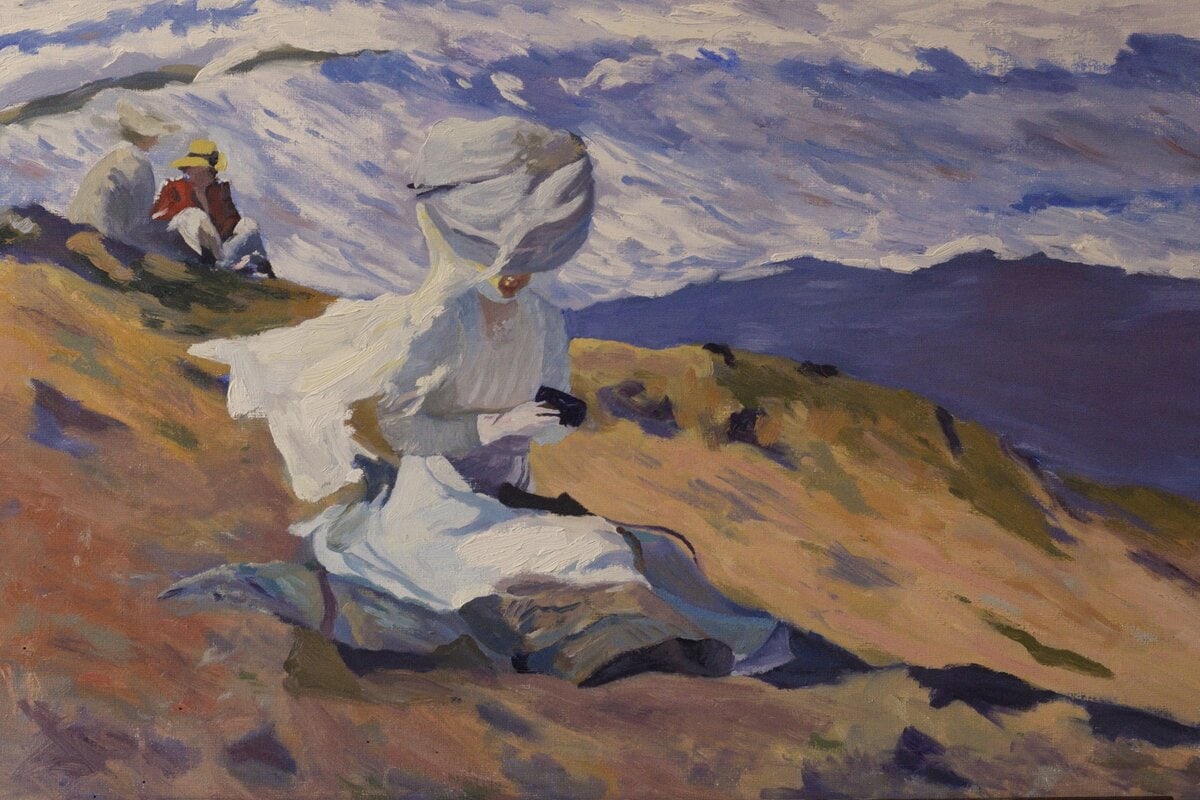
Instantánea, Biarritz
A 40 × 60 cm oil study exploring coastal light, wind-blown white fabric and the balance between figure and landscape.
Original oil painting · $550
View the Painting →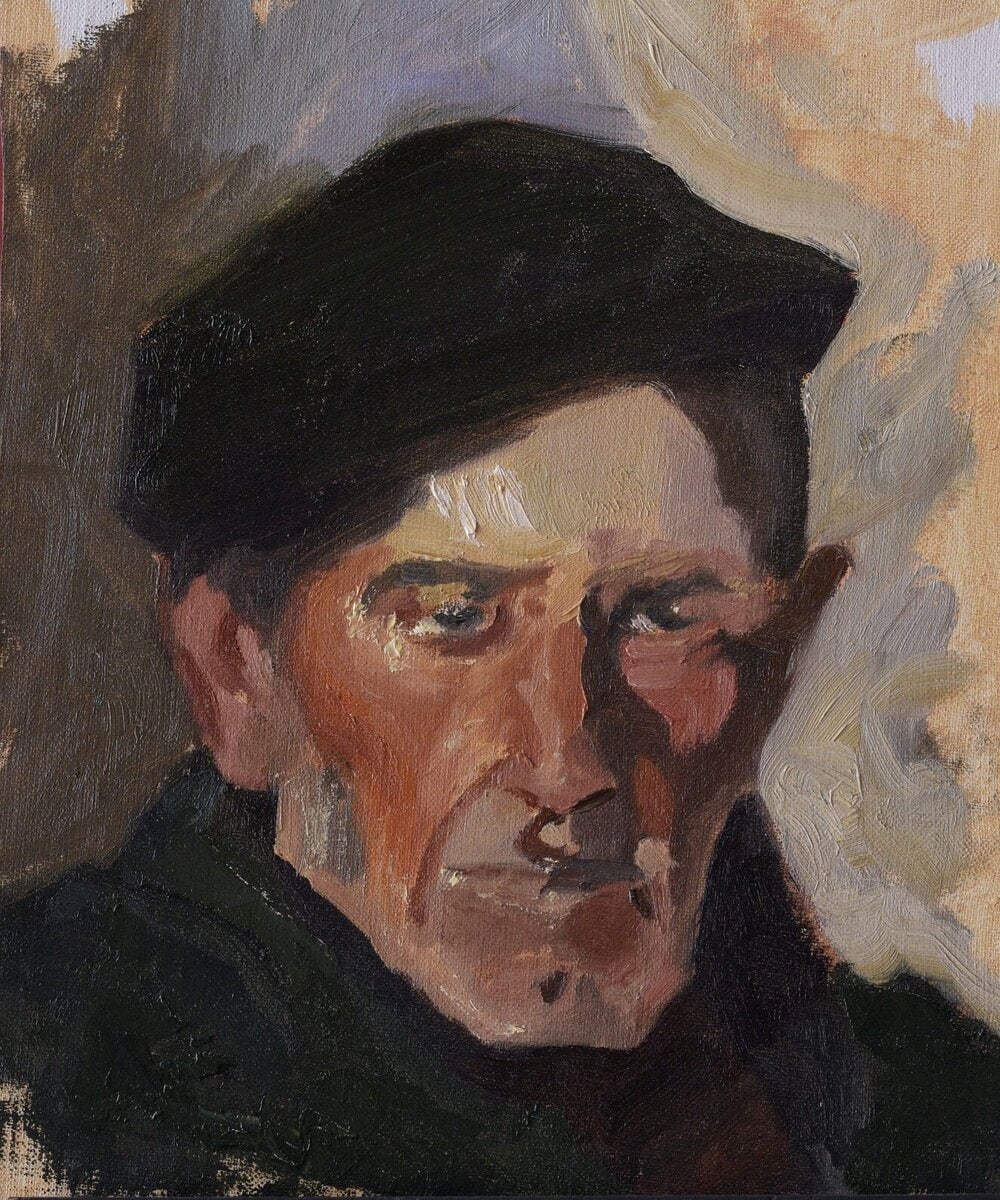
Bebedor Vasco Face Detail
A 25 × 30 cm portrait study focused on colour temperature, angular structure and direct, visible brushwork.
Original oil painting · $350
View the Painting →Commissioning a master study
I am also open to discussing commissioned oil studies after historic paintings that are in the public domain. A commission can focus on the full composition or on a selected detail such as a face, figure, hand, landscape passage or section of expressive brushwork.
Each study is painted by hand as an individual oil painting. The source artist and original work are clearly identified, while the completed painting is signed by Andrea Bocedi and supplied with documentation of authorship.
Price depends on the size, complexity and level of detail. To discuss a particular painting, send the title of the historic work, preferred dimensions and destination country.
Master studies after Joaquín Sorolla — FAQ
What is a master study?
A master study is a painting made to analyse and learn from an earlier artist’s work. It can examine composition, colour, drawing, value, edges or brushwork. The original painter and source artwork should always be clearly identified.
Are these paintings prints?
No. Both works are individual oil paintings with visible brushstrokes and a physical paint surface. Each exists as one hand-painted object.
Why study Joaquín Sorolla?
Sorolla offers exceptional lessons in reflected light, colour temperature, movement, simplification and confident paint handling. His paintings often look spontaneous, but their apparent freedom is supported by very precise structural decisions.
Can I commission a copy of a historic painting?
Commissioned studies after paintings in the public domain can be discussed. The final work will be presented transparently as a contemporary study painted by Andrea Bocedi after the named historic artist.
Explore more paintings and studio articles
Browse available original works, plein air paintings and other articles about painting practice and individual artworks.
