
Independent oil paint comparison · studio and plein-air use
Oil Paint Brands I Have Actually Used: An Honest Artist’s Review
This is a practical comparison of oil paint brands I have used while painting outdoors and in the studio. It is not a laboratory test, a sponsored ranking or a review based on squeezing a few fresh colours onto a clean palette.
My observations come from regular painting: thinning colours for an underpainting, mixing them with white, leaving paint in a pochade box, working in heat and cold, building thicker passages and seeing how the surface dries.
I am an Italian-Polish oil painter working mainly with landscape, architecture, figurative subjects and plein-air studies. You can read more about my background on the About the Artist page or view the paintings in my oil painting portfolio.
The qualities that matter most to me are pigment strength, consistency, predictability between colours, behaviour when mixed with white, drying surface and whether the paint can be used directly from the tube without unnecessary mediums.
Individual pigments naturally have different drying times and physical properties. Even so, a well-made range usually has a recognisable internal character. Some brands feel stable and predictable across most of the palette; others vary sharply from one tube to another.
Quick Oil Paint Brand Comparison
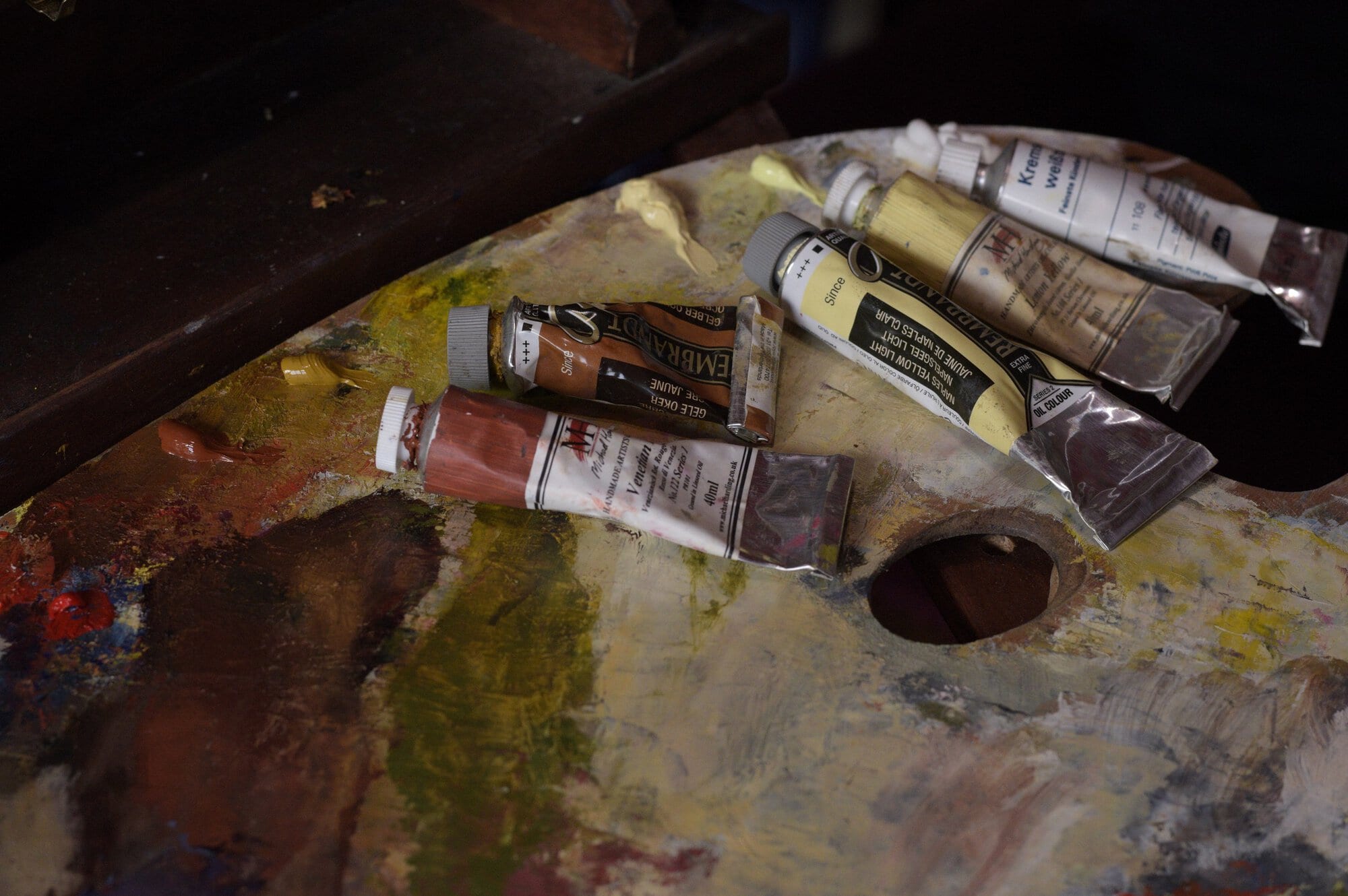
| Paint range | General handling | Pigment strength | My practical verdict |
|---|---|---|---|
| Michael Harding | Smooth, substantial and highly consistent | Excellent | My favourite overall oil paint |
| Rembrandt | Reliable, slightly lighter than Michael Harding | Very good | Best balance of quality, consistency and price |
| Master Class | Often very good, but more variable between pigments | Strong | Technically excellent value, with ethical reservations |
| Ladoga | Stiffer and less predictable | Variable | Usable budget paint with a good glossy drying surface |
| Maimeri Classico | Oily and loose | Low | Not recommended as a main palette |
| Van Gogh | Dense and workable | Moderate | A reasonable student paint for learning |
| Winton | Similar to Van Gogh but more oily | Moderate | A student range I personally find pleasant to use |
| Ferrario 1919 | Based on one colour: strong and well bodied | Very good in the tube tested | Promising, but too little experience for a range-wide verdict |
| Schmincke Kremserweißton | Long, ropey, transparent and slightly warm | Specialist white | The best lead-white substitute I have used |
Michael Harding Artist Oil Colours Review
Michael Harding is my favourite oil paint brand and the standard against which I compare most other professional oil colours.
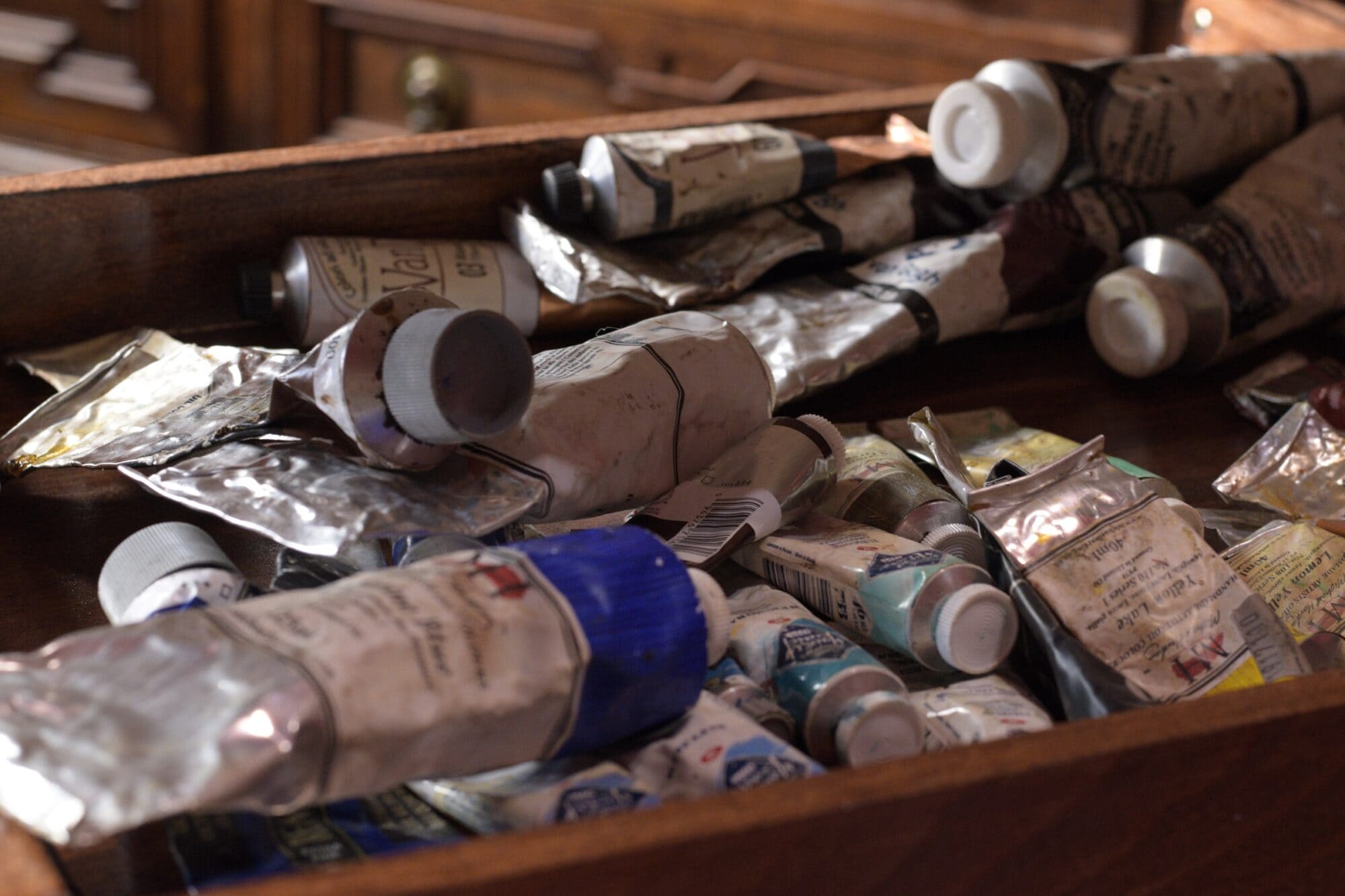
The first noticeable difference is physical. A 40 ml Michael Harding tube generally feels filled properly and firmly with paint. With some other brands I have encountered empty spaces or pockets of air inside the tube. Michael Harding tubes normally feel packed close to capacity.
The paint is heavily loaded with pigment. Colours stay clear and intense, even when I use a considerable amount of solvent during the first stages of a painting. Weaker paints can quickly become pale, vague or characterless in a thin underpainting. Michael Harding colours usually keep their identity.
The consistency is almost ideal for the way I work: smooth, substantial and neither excessively loose nor unnecessarily stiff. I can use most colours directly from the tube. They do not require a medium simply to become workable.
Another major advantage is consistency across the range. Roughly ninety percent of the Michael Harding colours I have used share a similar physical character. Drying time naturally changes with the pigment, but the general handling remains predictable.
Many colours also stay usable for a surprisingly long time. Paint left in my pochade box can sometimes remain workable for a week and still be ready to use during the next session.
The pigment selection is wide enough for both a restrained traditional palette and more specific colour choices. Series 1 is not cheap, but I find the price acceptable for this level of quality. Much of my regular palette comes from Series 1, with some colours from Series 2.
Rembrandt Oil Colours Review
Rembrandt is probably my second favourite oil paint range after Michael Harding.
The consistency remains impressively similar from one pigment to another, and the colours usually dry with an attractive glossy surface. This predictability makes Rembrandt a dependable professional paint for both studio and plein-air use.
Compared with Michael Harding, however, the pigmentation feels noticeably weaker and the body of the paint seems lighter. A 40 ml tube of Rembrandt also appears to disappear much faster in my normal use than a 40 ml tube of Michael Harding.
This may be partly the result of pigment concentration and partly the lighter physical consistency. Whatever the explanation, the practical effect is that I use more paint to achieve a similar strength.
The price is nevertheless reasonable for an artist-grade range, and the dependable handling makes Rembrandt one of the safest choices for a serious working palette.
Nevskaya Palitra Master Class Oil Paint Review
Master Class can be a surprisingly strong oil paint for its price. Many colours are heavily pigmented, intense and pleasant under the brush.
The paints often dry with a rich, glossy surface comparable to the finish I get from Michael Harding and Rembrandt. The consistency is generally good, although it depends more strongly on the individual pigment than it does in the most predictable professional ranges.
The selection contains many useful pigments, but also a large number of unnecessary convenience colours mixed from three or four pigments. I usually avoid these complicated mixtures and choose colours with simpler, more predictable pigment compositions.
The price and tube size made Master Class especially practical for plein-air painting . Outdoors, I often want to use generous amounts of paint without treating every brushstroke as an expensive decision.
Quality control has not always been perfect. Some tubes contained noticeable air pockets, and on two occasions I received tubes in which the paint was already almost completely dry.
Ladoga Oil Paint Review
Ladoga is generally somewhat stiffer than Master Class. The paints can still be used directly from the tube, but their behaviour is less predictable from one pigment to another.
Several colours lose strength quickly when mixed with white. This makes colour mixing less dependable, particularly when a strong middle tone suddenly becomes weak or chalky after only a modest addition of white.
One genuine advantage is the drying surface. Ladoga colours often dry with a pleasant gloss rather than the flat or dull finish found in some other inexpensive and student-grade paints.
What Is Actually on My Palette Now?
Some of the student-grade paints discussed in this article are leftovers from the beginning of my painting practice. They are included because I used them enough to understand their behaviour, not because they still form the basis of my working palette.
For a long time now, my active palette has been based almost entirely on artist-grade and professional paints. I mainly combine Michael Harding with selected Rembrandt and Master Class colours, together with an occasional individual Maimeri Classico colour where it serves a specific purpose.
You can see how these paints behave in completed work throughout my painting portfolio, Tuscan landscape paintings and Sardinian coastal paintings .

Maimeri Classico Oil Paint Review
Maimeri Classico has a noticeably oily consistency and relatively low pigment strength. When mixed with white, many colours lose their intensity very quickly.
The paint can dry with a pleasant glossy surface because it is essentially oil and pigment, but in my experience there is simply not enough pigment for it to function as the main paint range on a serious working palette.
I now use it only as an occasional practical filler. The main example is Cadmium Yellow Lemon. In places where I want to squeeze out a generous amount of yellow, its lower concentration becomes less problematic because I am applying a substantial quantity of paint.
This does not make Classico useless. It can work for broad studies, early practice or situations where large quantities are required. I simply would not recommend building a complete main palette around it.
Van Gogh Oil Paint Review
Van Gogh is a clear step above Maimeri Classico and is good enough for someone learning oil painting seriously.
The paints generally have more body and better colour strength. The consistency is often dense, but not usually so stiff that painting becomes impossible without adding medium.
Some colours appear to contain a noticeable amount of filler and can dry with a slightly pasty or chalky character. The behaviour also changes depending on the pigment.
It remains a student range, but it offers a convincing enough painting experience for studies, learning colour mixing and developing brush control.
Winton Oil Colour Review
Winton behaves broadly similarly to Van Gogh, although I find it somewhat more oily. Personally, I like this character and generally find the paint pleasant to use.
It is not as concentrated or refined as an artist-grade range, but it remains workable for studies, underpainting, exercises and larger passages where significant quantities of paint are needed.
As with most student paints, the individual pigment matters. Some tubes perform far better than others, so the name of the range alone does not describe the quality of every colour.
Ferrario and Ferrario 1919 Oil Paint Review
Standard Ferrario Oil Colours
The standard Ferrario paints I have used behaved somewhat like Van Gogh, although certain colours could be stiffer. They remained workable, but their physical character was less uniform than the professional ranges I currently prefer.
Ferrario 1919
My experience with Ferrario 1919 is limited to one cadmium yellow, so I cannot fairly judge the complete range.
That individual tube is a very good paint. Its colour strength, body and behaviour are surprisingly close to Michael Harding. It feels like a serious professional colour rather than an inexpensive substitute.
The problem is availability. I found the tube during a sale in Kraków and have rarely seen the range offered locally since then.
Winsor & Newton Artists’ Oil Colour Review
My experience with the professional Winsor & Newton Artists’ Oil Colour range is limited to Flake White Hue.
It is a good and useful white, with a more oily consistency than the Rembrandt paints I normally use. It handles well and is perfectly serviceable, but one white is not enough evidence for a fair judgement of the complete Winsor & Newton artist range.
Schmincke Kremserweißton Review
Schmincke Kremserweißton belongs in a separate category because it is a specialist white rather than a complete paint range.
It is the best substitute for traditional lead white that I have used. The paint is relatively transparent, slightly warmer than titanium white and has a long, ropey consistency.
Its texture reminds me of paint bound with a bodied or stand oil, although that is an observation about handling rather than a confirmed statement about the exact formulation.
Kremserweißton is especially useful when I want to lighten a colour without immediately destroying its transparency, warmth or internal colour. Titanium white can make a mixture cold, opaque and chalky very quickly. This white allows the change to happen more gradually.
Renesans Oils for Art
I have also used the Polish Renesans Oils for Art range, but I do not yet have enough specific observations to give it the same detailed assessment as Michael Harding, Rembrandt, Master Class or Maimeri Classico.
Rather than fill this comparison with generic statements, I prefer to leave the range unranked until I have a clearer opinion about its consistency, pigment strength and drying behaviour across several colours.
See These Oil Paints in Finished Paintings
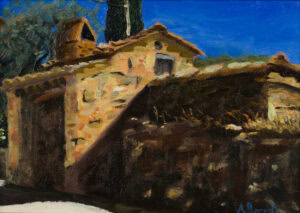
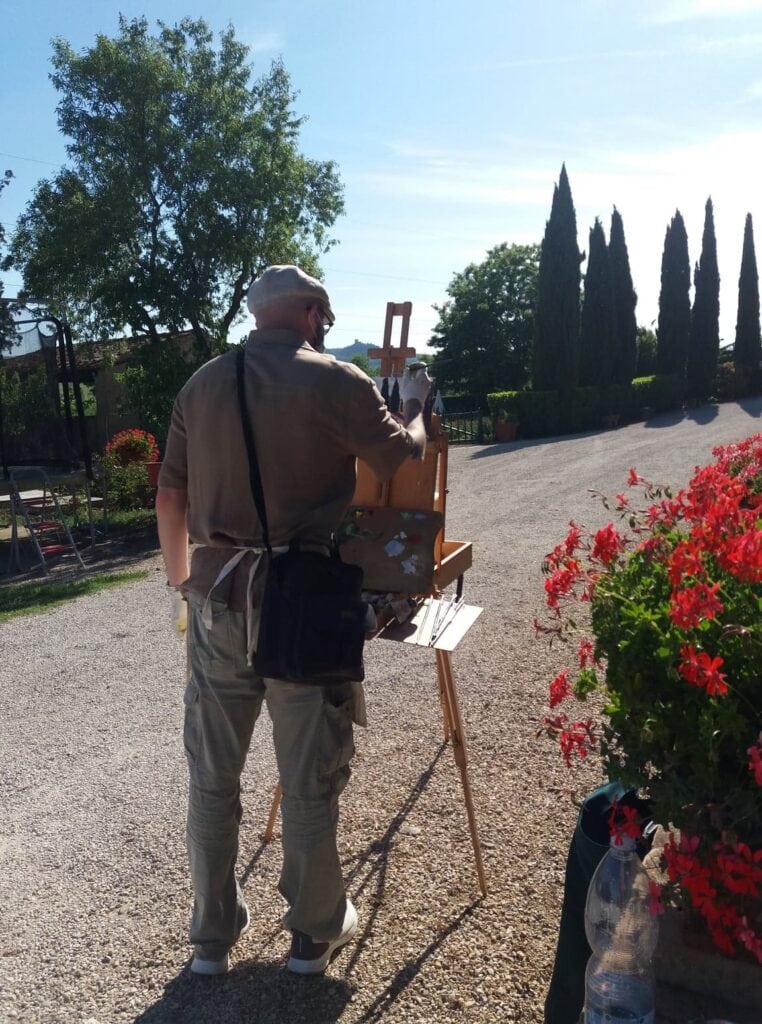
Paint quality matters only when it becomes part of an actual painting. These original works show the materials used in direct plein-air sessions and studio painting: thin underlayers, mixtures with white, strong colour, broken brushwork and thicker passages.



Browse more original oil paintings for sale, Mediterranean paintings , plein-air oil paintings and small original oil paintings .
My Overall Oil Paint Recommendations
- Favourite overall oil paint: Michael Harding.
- Best balance of quality, consistency and price: Rembrandt.
- Best inexpensive technical performance: selected Master Class colours, although I do not currently recommend financially supporting Russian manufacturers.
- Best student-grade ranges from those tested: Van Gogh and Winton.
- Best specialist white: Schmincke Kremserweißton.
- Range I would not use as my main paint: Maimeri Classico.
The most expensive paint is not automatically necessary for every pigment. However, strong pigmentation and predictable consistency make a real practical difference. They allow me to paint directly, preserve colour in thin passages, mix with greater confidence and avoid correcting problems created by weak or heavily filled paint.
My own palette is now almost entirely based on professional and artist-grade colours. Michael Harding remains the clear favourite, Rembrandt is the most dependable alternative, and selected Master Class colours offer strong technical performance among the paints I purchased previously.
Oil Paint Brand FAQ
Which oil paint brand is best for professional painters?
Of the ranges I have used, Michael Harding offers the strongest overall combination of pigment concentration, consistency and direct handling. Rembrandt is a more affordable and dependable alternative.
Is Michael Harding oil paint worth the price?
In my experience, yes, especially for colours from the lower price series. The paint is strongly pigmented, the tubes feel properly filled and a small amount can remain powerful in mixtures and thin underpainting.
Can Michael Harding oil paint be used without medium?
Most of the Michael Harding colours I use can be painted directly from the tube. Their consistency is smooth and substantial without being unnecessarily stiff.
Is Rembrandt oil paint artist grade?
I use Rembrandt as a dependable professional paint. It is less intensely pigmented than Michael Harding in my experience, but it remains consistent across pigments and usually dries with an attractive gloss.
Is Van Gogh or Winton better for learning oil painting?
Both are usable student ranges. Van Gogh often feels denser, while Winton is generally more oily. I personally enjoy Winton’s handling, but the best choice can depend on the individual colour and the painter’s preference.
What is the best substitute for lead white?
Schmincke Kremserweißton is the best lead-white substitute I have used. It is more transparent and slightly warmer than titanium white, with a long, ropey consistency that allows colours to be lightened gradually.
Are student-grade oil paints good enough?
They are good enough for learning, studies and large early exercises. However, stronger artist-grade paints offer more predictable mixtures, better pigment strength and a more dependable painting surface. The student-grade paints in this review mostly remain from my first years of painting.
